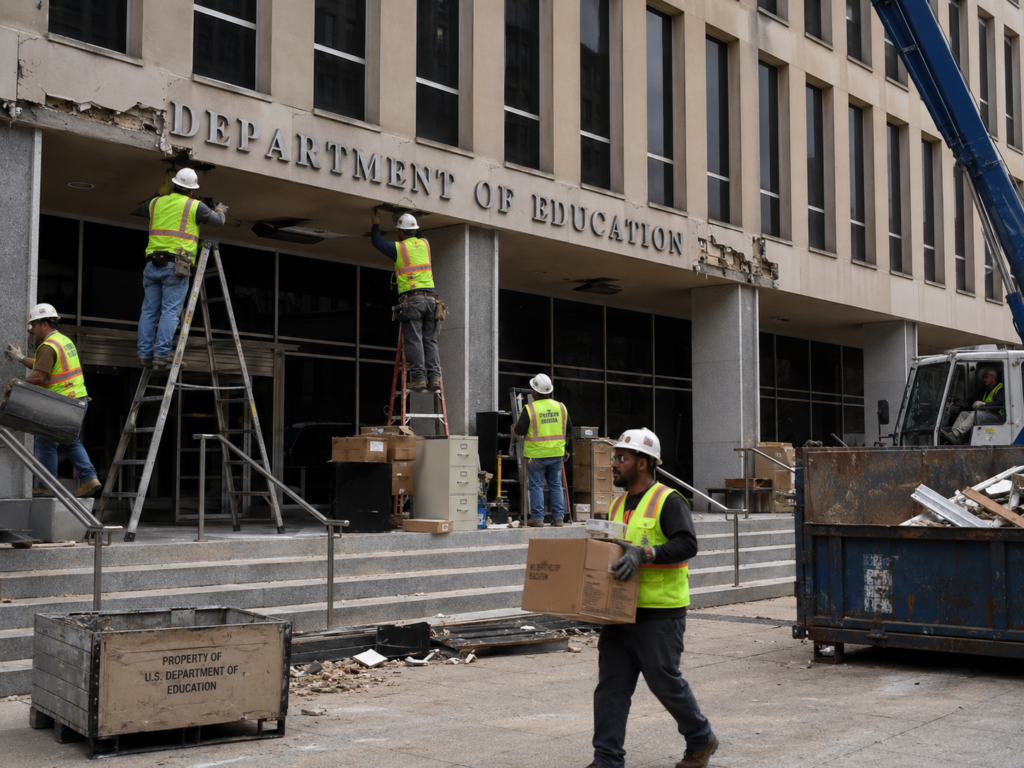
In a continuation of its destructiveness, the Trump administration has decided to move oversight of special education and civil rights from under the purview of the Department of Education.
The Department of Justice will now handle enforcement of civil rights in education. The DOJ will also be responsible for student privacy and training assistance to schools. The Department of Health and Human Services will handle special education.
This goes along with the plans Trump stated for his second term to move education back to the states. Only Congress can abolish the Department of Education, but Secretary Linda McMahon, has made deals with other agencies to take over the bulk of the work the DOE does. She has claimed that the deals will allow responsibilities to handled by agencies that best support them.
“The Trump Administration has been clear: as we scale back federal micromanagement when it hinders success, we are equally committed to bolstering the efficacy of federal oversight where it is essential,” McMahon said in a statement.
Back in October, Special Education Programs and the Rehabilitative Services Administration, the two divisions that make up the Office of Special Education and Rehabilitative Services, experienced massive lay-offs. Leaders and employees of these departments expressed concern that under the plan to return education administration to the state, states would not receive the money from the federal government that it needs to ensure that special needs students and their families get the support they deserve.
The Office of Special Education and Rehabilitative Services manages about $15 billion in funding and provides oversight for the Individuals with Disabilities Education Act (IDEA). The Office for Civil Rights addresses complaints of discrimination at the nation’s schools and colleges.
According to Ed Trust, a think tank focused on educational equity, these changes don’t bode well for accountability and foster doubt about services that families need.
“As is too often the case, traditionally underserved students – including students with disabilities, Black and Latino students, multilingual learners, students from low-income backgrounds, and students in rural communities – will bear the greatest burden created by this reckless decision, to which the disability and civil rights communities have already been vehemently opposed,” the group said in a statement.