
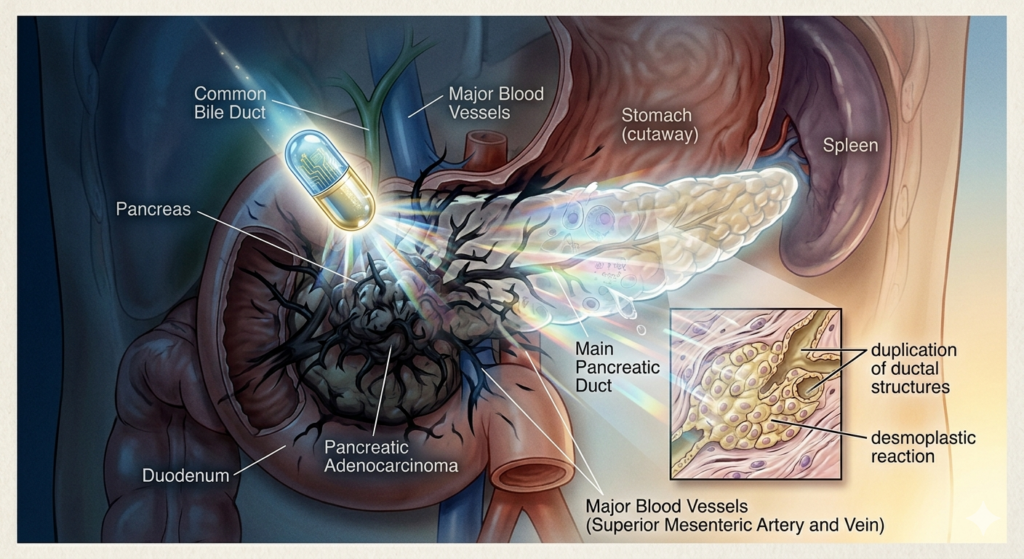
A new pill is helping people with advanced pancreatic cancer live longer, according to researchers
The drug is called daraxonrasib and it works by blocking a mutated protein that causes cancer growth in more than 90% of pancreatic cancer cases. That’s a target that has been hard to hit with other treatment modalities.
In a study, 500 patients who were experiencing metastasis that had quit responding to other treatments, were assigned the pill or more chemotherapy. Those who took the pill daily experienced double survival rates with fewer side effects.
Participants who took daraxonrasib lived for more than 13 months compared with those who were assigned chemotherapy. The chemotherapy group lived for 6.7 months.
“While not curing the cancer, it is a very large step forward,” said Dr. Zev Wainberg, of the University of California, Los Angeles, who helped lead the study.
Although the pill’s effects taper off, study participants that used it reported less pain and better quality of life while their tumors decreased in size. Many continued the drug after the data was compiled and analyzed. Wainberg said it could mean that the survival gap will enlarge.
Dr. Brian Wolpin from the Dana-Farber Cancer Institute presented the data on Sunday, stating that the medication ought to be established as the new standard of care for patients with previously treated metastatic pancreatic cancer. He noted that future research will investigate using the drug at earlier stages of the illness, specifically to determine if shrinking the tumors could make more patients eligible for surgery.