A federal judge has temporarily blocked construction activities at a controversial immigration detention facility located in Florida’s Everglades, known as “Alligator Alcatraz,” siding with environmental and tribal groups who argue the project violates federal law and threatens the delicate ecosystem.
U.S. District Judge Kathleen Williams issued a temporary restraining order this week prohibiting further building — including lighting, paving, and fencing — at the facility for at least 14 days while she considers a broader injunction request. Detentions and other day-to-day operations at the site, however, are allowed to continue during that period.
The lawsuit was brought by Friends of the Everglades, the Center for Biological Diversity, Earthjustice, and the Miccosukee Tribe. The groups allege that the state rushed construction of the facility, referred to by critics as “Alligator Alcatraz,” without conducting an Environmental Impact Study or providing an opportunity for public comment, in violation of the National Environmental Policy Act (NEPA).
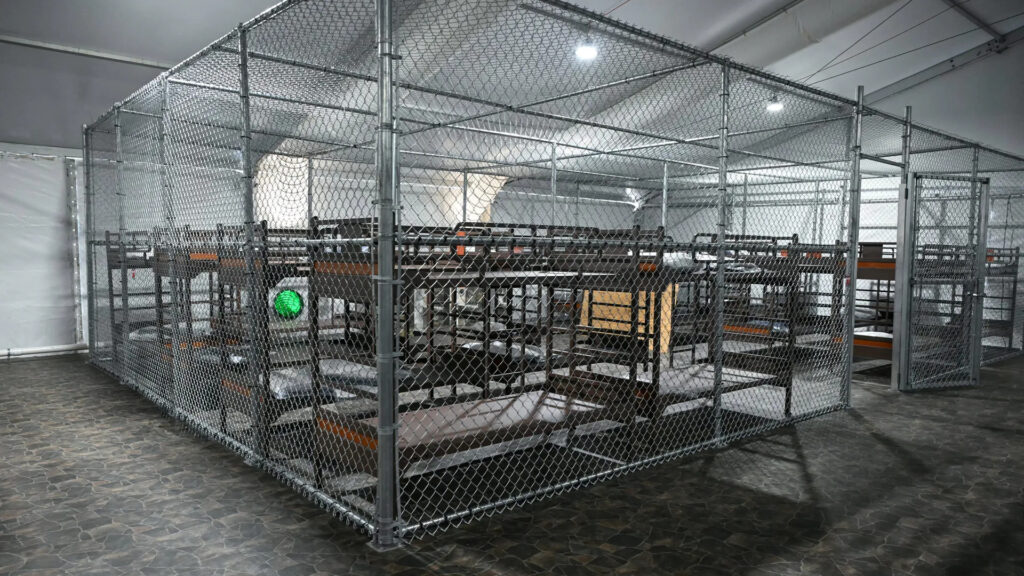
Located at a largely abandoned airfield in Big Cypress National Preserve, the facility contains tents and caged cells capable of holding up to 5,000 immigration detainees.
Environmental Impact Disputed
During two days of hearings, environmental experts testified that the construction was causing irreparable harm to the Everglades and to the endangered Florida panther.
Randy Kautz, a wildlife ecologist who helped draft Florida’s Panther Recovery Plan, said bright lights, increased traffic, and human activity at the site would likely displace panthers from approximately 2,000 acres of their habitat. Florida panthers, one of the rarest large mammals in North America, number between 120 and 230 in the wild.
“This type of intrusion will push panthers out of critical habitat they can’t afford to lose,” Kautz told the court.
Christopher McVoy, a wetlands ecologist involved in Everglades restoration efforts, warned that the construction of 20 acres of asphalt would degrade water quality in the surrounding wetlands.
“The Everglades has an extremely low nutrient threshold,” McVoy said. “Runoff from this site containing even small amounts of pollutants could have a drastic impact.”
State and Federal Authority in Question
Lawyers for the state of Florida and the Trump administration argued that federal environmental law does not apply because the facility is funded and operated by the state. Florida has allocated an estimated $450 million toward the project and is expected to seek federal reimbursement.
“NEPA does not apply here because the federal detention facility is controlled by Florida,” Justice Department attorney Marissa Piropato told the court.
But Judge Williams appeared skeptical, pointing to repeated references by Trump officials labeling the facility as a federal Immigration and Customs Enforcement (ICE) site. She pressed both state and federal attorneys on who ultimately controls the operation.
“Who’s running the show?” she asked during the hearing, suggesting the administration may have intentionally blurred jurisdictional lines to avoid federal compliance.
She expressed frustration upon learning that construction was still underway despite ongoing litigation and noted that the state had refused informal requests to pause the work. Her restraining order halts all building activities until a follow-up hearing scheduled for Tuesday.
Reactions and What’s Next
Eve Samples, executive director of Friends of the Everglades, welcomed the ruling.
“We’re pleased that the judge saw the urgent need to put a pause on additional construction,” she said in a statement. “We look forward to advancing our ultimate goal of protecting the unique and imperiled Everglades ecosystem from further damage caused by this mass detention facility.”
A spokesperson for Florida Attorney General James Uthmeier responded with criticism: “Judge Williams’ order is wrong, and we will fight it.”
Temporary restraining orders are typically not appealable. The case will continue as the court weighs the plaintiffs’ request for a preliminary injunction, which could halt the facility’s construction and operations entirely.