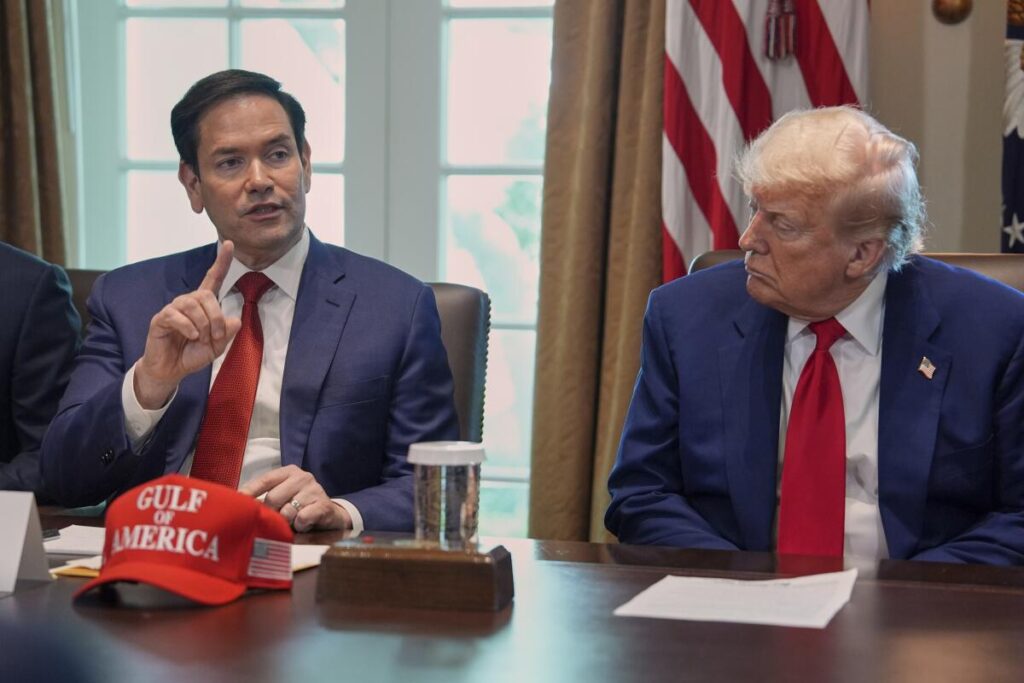
Secretary of State Marco Rubio, on Tuesday, ordered diplomats to resume using Times New Roman font in their communications and called the switch to Calibri a diversity move.
Former Secretary of State Antony Blinken enacted the change in 2023 because, he said, Calibri was more accessible for people with disabilities because it was the default font for Microsoft and lacked the angularity of Times New Roman.
Calibri is a sans-serif font. Sans-serif fonts are often perceived as cleaner and less cluttered, making individual characters easier to distinguish and improving readability, especially for people with visual tracking difficulties or dyslexia.
Calibri also has a higher x-height which makes the body of the lowercase letters appear larger, aiding in character recognition and reduces eye strain. Sans-serif fonts essentially allow the text to legible at smaller font sizes.
A (messaging) cable was sent to all U.S. diplomatic posts that asserted that typography is one of the hallmarks of professional documents and that Calibri is too informal compared to serif fonts.
“To restore decorum and professionalism to the Department’s written work products and abolish yet another wasteful DEIA program, the Department is returning to Times New Roman as its standard typeface,” the message read.
“This formatting standard aligns with the President’s One Voice for America’s Foreign Relations directive, underscoring the Department’s responsibility to present a unified, professional voice in all communications,” the cable continued.
Although the State Department has not commented on the change, the Trump 2.0 administration came into office dead-set on terminating federal DEI programs and has tried to influence the private sector to do the same.
Trump and his supporters have held that diversity programs discriminate against white people and men, a myth fundamentally misunderstands the purpose and function of diversity, equity, and inclusion (DEI) initiatives.