
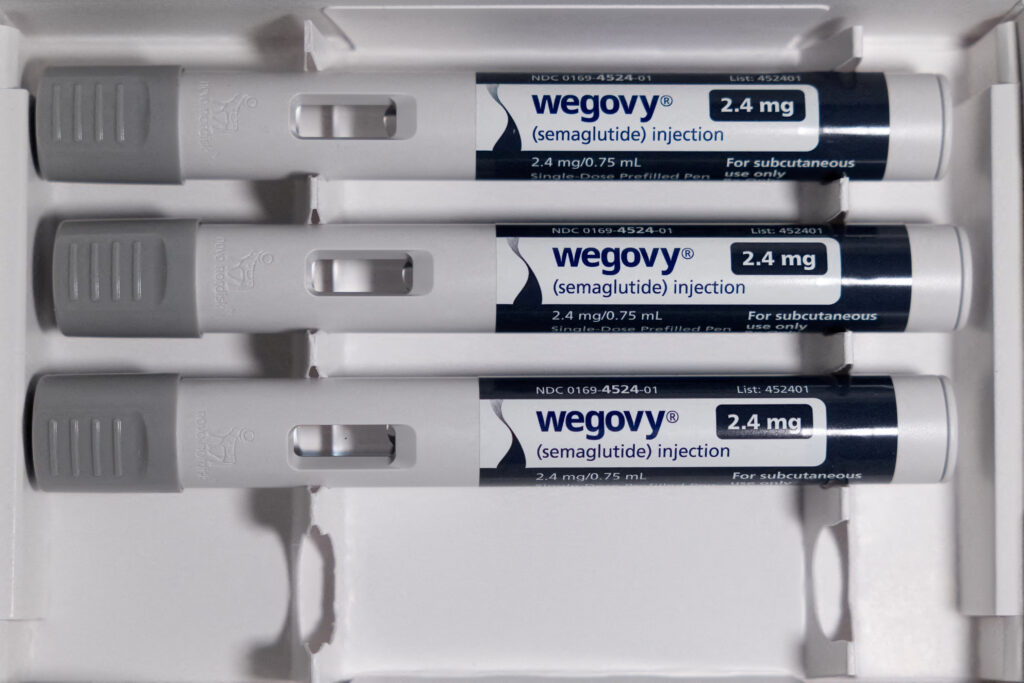
The Food and Drug Administration has approved Wegovy for the treatment of the serious liver disease metabolic-associated steatohepatitis (MASH) for adults with moderate-to-advanced fibrosis.
Wegovy was first approved in 2017 for obesity and to lessen the incidence of cardiovascular events.
The drug’s effectiveness was evaluated in an ongoing phase 3 trial. An interim analysis at 72 weeks included 800 participants randomly assigned to receive either Wegovy (534 participants) or a placebo (266 participants), along with lifestyle changes such as a reduced-calorie diet and increased physical activity. All participants were maintained on stable doses of lipid-lowering, glucose-control, and weight-loss medications. The primary efficacy measure at week 72 was based on liver biopsy results.
Preliminary findings showed that 63% of participants on Wegovy achieved resolution of MASH with no worsening of liver scarring, compared with 34% in the placebo group. Additionally, 37% of those taking Wegovy showed improvement in liver scarring without worsening of MASH, versus 22% of the placebo group. The trial, set to continue for 240 weeks, will assess whether the improvements in inflammation and scarring observed at 72 weeks translate into reduced rates of death, liver transplant, and other liver-related complications.
What is MASH?
Metabolic-associated steatohepatitis (MASH) is a severe form of fatty liver disease that occurs when fat buildup in the liver leads to inflammation and scarring. Risk factors include obesity, type 2 diabetes, high triglycerides, and elevated LDL cholesterol. MASH is progressive and can develop into cirrhosis, liver failure, liver cancer, the need for transplantation, or death. Some people experience fatigue, unexplained weight loss, and muscle weakness, though many show no symptoms until significant liver damage occurs.
Wegovy, a weight-loss therapy, may improve liver inflammation and scarring through weight reduction and other mechanisms that are not yet fully understood. The drug received breakthrough therapy designation for this indication and was approved under the FDA’s accelerated approval pathway. That pathway allows earlier access to therapies for serious conditions based on surrogate endpoints, such as lab results, while requiring additional studies to confirm improvements in outcomes like survival, functioning, or quality of life.
The FDA has called MASH a “growing public health issue.”