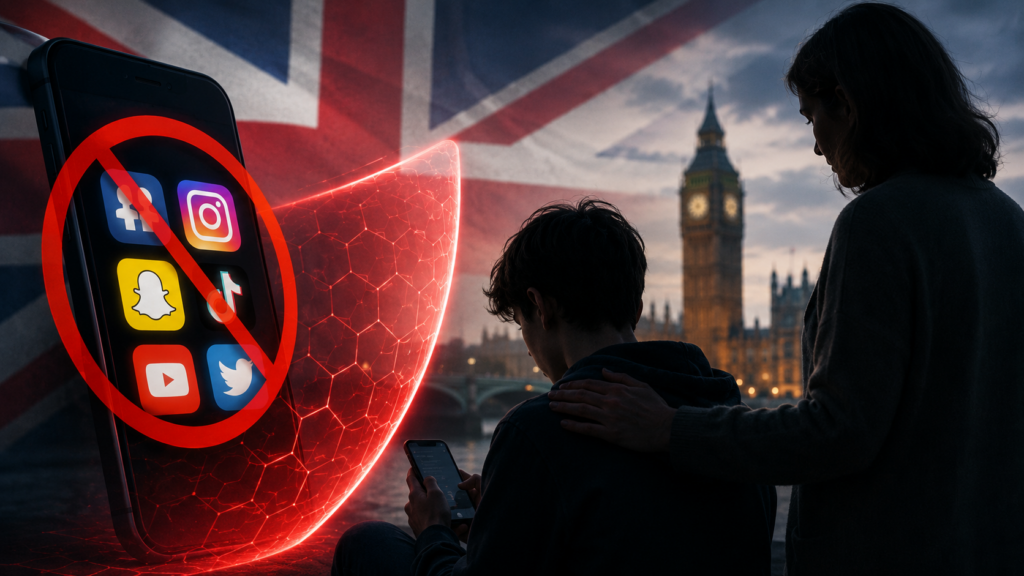
Britain will ban children younger than 16 from using a range of social media apps, including Snapchat, TikTok and YouTube, to protect young people from harmful content and excessive screen time, Prime Minister Keir Starmer said Monday.
Starmer told a news conference that he would push back if technology companies resist the move. He acknowledged that some teenagers would try to get around the ban, but said he is “not prepared to compromise on the safety and happiness of our children.”
“Every parent can see it with their own eyes. Social media is making children unhappy,” said Starmer, who has two teenage children. “I’ve heard firsthand from families crying out for change, and we will do right by them.”
The move, expected to take effect early next year, makes the U.K. part of a growing global effort to tighten online safety rules for children. Australia, Canada, Brazil and Indonesia have introduced legislation or announced age-based restrictions or requirements for children’s access to social media. France, Spain, Denmark, Thailand and South Korea are among the countries studying or developing similar approaches.
The U.K. plans to follow the same model as Australia, which last year became the first country to bar children younger than 16 from holding social media accounts. Platforms that fail to take reasonable steps to exclude children younger than 16 could face multimillion-dollar fines.
The U.K. said the ban will apply to platforms including Snapchat, TikTok, YouTube, Instagram, Facebook and X, but not YouTube Kids or messaging services such as WhatsApp and Signal. Starmer stressed that enforcement would target technology companies, not children.
The prime minister also said he would go further than Australia’s measures.
He said the government would act to prevent strangers from contacting children on gaming and livestreaming platforms. Authorities also are considering additional measures, including overnight curfews and breaks in infinite scrolling for users younger than 18. More details are expected next month.
Starmer’s announcement drew mixed reactions.
The decision follows a public comment period in which the government received 116,000 responses from parents, the technology industry and children. The number of responses was second only to a 2012 request for public input on same-sex marriage.
The vast majority of respondents, more than 90%, supported a ban for children younger than 16, the government said.
Esther Ghey, whose 16-year-old daughter, Brianna, was killed in 2023 by two teenagers who had accessed harmful content online, said the ban could “potentially save so many children’s lives,” but added that it should be accompanied by other measures.
The NSPCC, a leading children’s charity, praised the government’s ambition but urged authorities to ensure platforms roll out “robust age checks” and effectively enforce the policy.
Others were more skeptical.
Critics, including the Open Rights Group, have raised concerns about age verification companies and how users’ private data would be protected.
A YouTube spokesperson warned Monday that a blanket social media restriction could “push kids out of such curated, supervised, beneficial experiences and towards anonymous, less-safe services.”
Starmer acknowledged the challenges but said success would mean “a massive drop-off of children on social media” and “a cultural change, a sense that actually you can grow up differently.”
Starmer, elected just under two years ago, is under pressure to step down from members of his own party over what they view as poor leadership. He could face a leadership challenge in the coming days or weeks. He is seeking to introduce consequential measures that could serve as part of his legacy.