The Supreme Court on Monday rejected a request to review the role of race in policing.
The case involves a situation where officers in Washington, D.C. obtained the weapon of a federal agent during an unlawful police stop.
A lower court held that officers with the city’s gun recovery unity unlawfully stopped Donte Carter without reasonable suspicion. The D.C. Court of Appeals suppressed the evidence and vacated Carter’s gun and theft convictions.
The Trump administration requested that the SCOTUS review the lower court’s findings, asserting that the court overturned Carter’s convictions because he may have justly believed he had no choice but to comply because he is a Black man, despite the police having no legal grounds to stop him.
The Trump administration claims that the finding effectively allows the police to undertake search and seizure for one person but not another based on race.
“Injecting such stereotypes into the Fourth Amendment puts that Amendment at cross-purposes with the equal-protection guarantee,” the Trump administration wrote. “It also puts officers in the untenable and unworkable position of needing to rely on racial stereotyping in order to assess the legality of their conduct.”
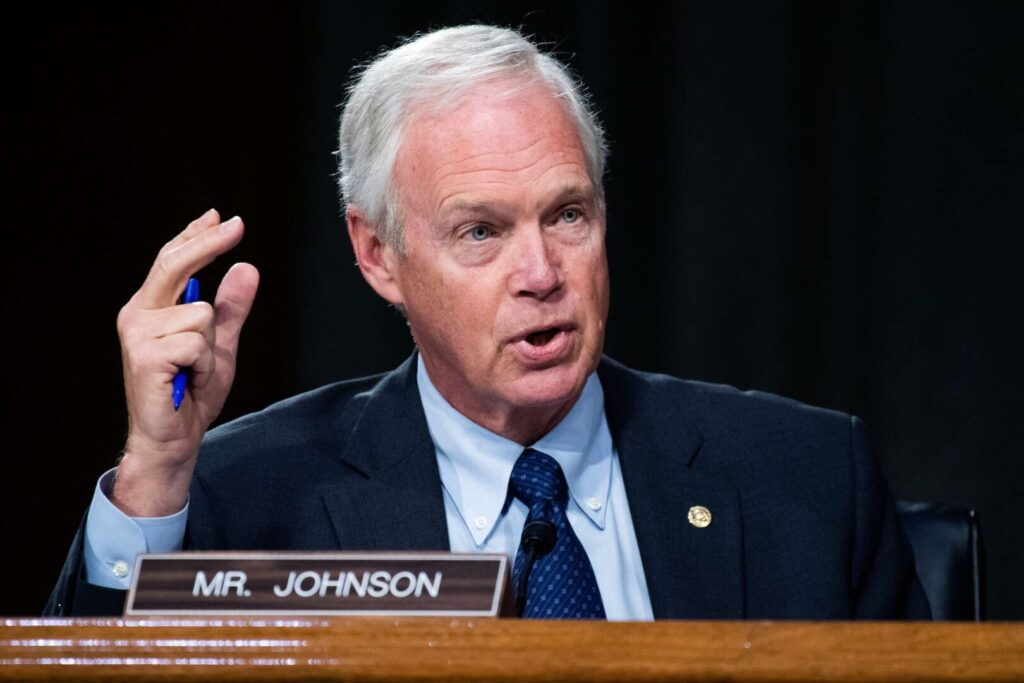
While the SCOTUS denied the review, Justices Alito and Thomas, noted right-wing loyalists, dissented saying that the case was was important for doctrinal and practical reasons.
“Under the test, officers will need to quickly assess a person’s race, and if officers and courts must craft special rules for black persons, what about darkskinned Latinos, other Latinos, and members of other minority groups?” Alito wrote.
Carter was one of 10 Black men stopped by law enforcement officers in Northwest Washington in 2020. Officers in tactical vests asked him to lift his shirt so they could see his waistband. Carter complied three times and then they asked him to lift his pants. The police say they saw an L-shaped protrusion in his pants and frisked him. The frisk resulted in a gun stolen from an FBI agent. He received eight gun-related charges.
The District of Columbia Court of Appeals ruled that police lacked the necessary justification to stop a man, finding that the interaction constituted an unlawful seizure under the Fourth Amendment.
The city’s highest court determined that Carter’s search failed the constitutional “free to leave” test. Under this legal standard, a seizure occurs if a reasonable person in the suspect’s position would believe they were not free to walk away from officers. The court noted that if an individual fears the consequences of not cooperating with police, the encounter is legally considered a seizure, requiring authorities to prove they had reasonable suspicion to initiate the stop.
In its ruling, the appellate court cited Carter’s race as a factor in concluding that officers needed reasonable suspicion for the detention. The court noted that considering race in this analysis aligns with the U.S. Supreme Court’s 1980 precedent in United States v. Mendenhall.
Carter’s legal team argued that race was only one factor and that Mendenhall held that race is not irrelevant to the Fourth Amendment seizure analysis, so the SCOTUS review was unwarranted.