Democrat Scott Colom has defeated Republican incumbent Cindy Hyde-Smith in Mississippi’s closely contested U.S. Senate race, becoming the state’s first Black senator since Reconstruction and ending more than four decades of Republican victories in elections for the office.
The Associated Press declared Colom the winner Wednesday, Nov. 11, after more than a week of counting absentee and affidavit ballots expanded his narrow election-night lead. Hyde-Smith subsequently conceded, ending a contest that remained undecided long after most of the nation’s midterm results had been announced.
Colom, a 43-year-old district attorney from north Mississippi, will become the first Black senator from the state in nearly 150 years and the first Black Mississippian elected to the chamber by popular vote. His victory also gives Democrats 55 seats in the incoming Senate, strengthening their majority following sweeping gains in the Nov. 3 midterm elections.
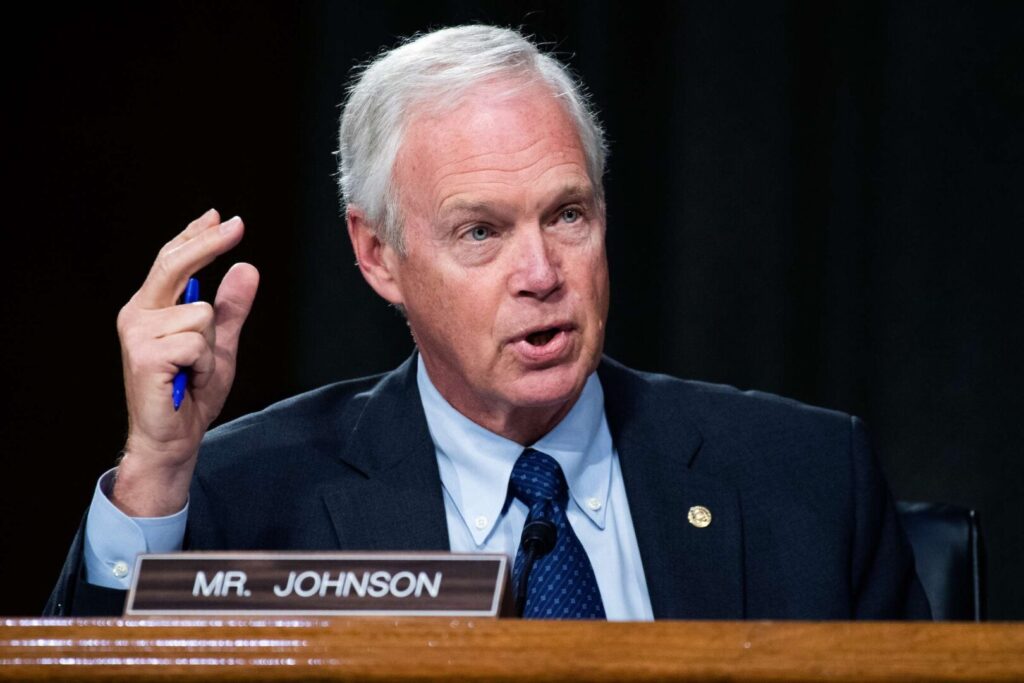
The outcome carries additional political significance because Hyde-Smith blocked Colom’s nomination to a federal judgeship in 2023. Three years later, the prosecutor she prevented from joining the federal bench will replace her in the U.S. Senate.
The election also exposed longstanding concerns about Mississippi’s voting procedures, including strict identification requirements, thousands of affidavit ballots requiring verification and disputes over whether eligible voters were being unnecessarily excluded from the count.
Colom’s victory came in a state President Donald Trump carried by approximately 23 percentage points in 2024, underscoring the extent of the political shift that helped Democrats capture control of Congress.
A Historic Victory Nearly 150 Years in the Making
Colom’s election marks a milestone in Mississippi’s political history, which includes slavery, segregation, violent resistance to civil rights and generations of efforts to restrict Black political participation.
The state previously sent two Black men to the U.S. Senate during Reconstruction, the period following the Civil War when the federal government sought to establish civil and political rights for formerly enslaved Americans.
Hiram Rhodes Revels became the first Black person to serve in the U.S. Senate when he took office in February 1870. Revels, a minister and educator, represented Mississippi for approximately 13 months.
He was succeeded in the state’s history by Blanche Kelso Bruce, who entered the Senate in 1875 and became the first Black American to serve a full six-year term in the chamber.
Bruce served until 1881, making him the last Black senator from Mississippi before Colom’s election.
Both Revels and Bruce were selected by the Mississippi Legislature, as was customary before ratification of the 17th Amendment in 1913 established the direct election of U.S. senators.
Colom will become the first Black senator from Mississippi chosen directly by the state’s voters.
His victory is particularly significant given Mississippi’s demographics. Black residents account for more than one-third of the state’s population, one of the highest proportions in the nation, yet Black candidates have historically faced substantial obstacles to winning statewide office.
Those barriers extended well beyond Reconstruction.
During the Jim Crow era, literacy tests, poll taxes, intimidation and racially motivated violence were used to suppress Black voting.
Even after passage of the Voting Rights Act of 1965, Black political representation in Mississippi remained limited by the lingering effects of segregation and the state’s entrenched political divisions.
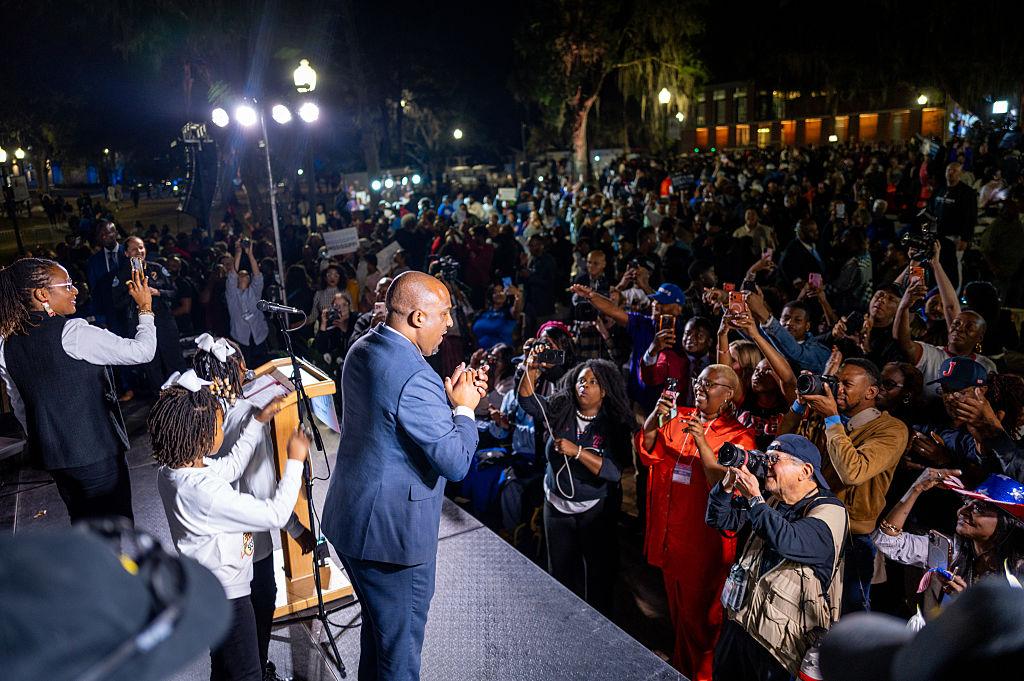
Colom acknowledged that history during his victory celebration at Tougaloo College, a historically Black institution near Jackson with deep ties to the civil rights movement.
He invoked the legacies of Medgar Evers, the Mississippi civil rights activist assassinated in 1963, and Fannie Lou Hamer, whose efforts to secure voting rights for Black Mississippians helped draw national attention to the state’s discriminatory election practices.
The setting reinforced the historical significance of the moment. Tougaloo College served as an important organizing center during the civil rights movement, providing a meeting place for activists challenging segregation and disenfranchisement.
Colom pledged to represent all Mississippians, regardless of whether they supported his candidacy.
“My commitment to you, each and every one of you, is that, first, I’m going to treat your children like I want my children to be treated,” he told supporters.
His victory represents a break from a political tradition in which Mississippi’s statewide offices have been dominated by white conservatives for decades.
Hyde-Smith Blocked Colom’s Federal Judgeship in 2023
Perhaps one of the most unusual aspects of Colom’s victory is his previous encounter with the senator he defeated.
In 2023, Colom was President Joe Biden’s nominee for a lifetime appointment to the U.S. District Court for the Northern District of Mississippi.
Colom had been serving as district attorney for Mississippi’s 16th Judicial District since 2016, representing Clay, Lowndes, Noxubee and Oktibbeha counties.
His nomination was supported by Mississippi Democratic Rep. Bennie Thompson and Republican Sen. Roger Wicker, who returned the paperwork necessary for the nomination to proceed.
Hyde-Smith, however, refused to return her approval through a Senate tradition known as the blue slip process.
Under the procedure, senators from a judicial nominee’s home state can indicate whether they support the nomination. The Senate Judiciary Committee has generally treated the absence of a positive blue slip as grounds to halt consideration of district court nominees.
Hyde-Smith’s refusal effectively blocked Colom from receiving a confirmation hearing.
In an April 4, 2023, statement, she acknowledged Colom’s professional reputation but cited concerns about his record.
She pointed to what she characterized as his opposition to legislation concerning transgender participation in women’s sports, as well as financial support associated with billionaire Democratic donor George Soros during Colom’s earlier campaign for district attorney.
Hyde-Smith said she could not support appointing him to the federal bench for life.
The White House criticized her decision, arguing that the administration had consulted with the senator and that she had not raised those concerns during earlier discussions.
Democratic Sen. Dick Durbin of Illinois, then chairman of the Judiciary Committee, also expressed disappointment over the decision.
The controversy drew renewed attention to the history of the blue slip process.
Although the practice originated as a means of allowing senators to weigh in on judicial nominees from their states, its use as an effective veto became particularly controversial during the civil rights era.
Mississippi Sen. James Eastland, a segregationist who chaired the Judiciary Committee from 1956 to 1978, used the procedure to obstruct judicial nominees he opposed, including those sympathetic to school desegregation.
Eastland’s use of the process gave individual senators substantial power over federal judicial appointments, a practice that has remained controversial across both political parties.
The historical connection adds another dimension to Colom’s election: A Black prosecutor whose federal judicial nomination was blocked through a procedure once used by a segregationist Mississippi senator will now occupy a seat in the same chamber.
Colom has said he holds no grudge against Hyde-Smith over the nomination and has forgiven her.
The episode nonetheless became a prominent part of the political narrative surrounding the race, illustrating how the two candidates’ professional histories had intersected years before they faced each other at the ballot box.
Economic Concerns and a Grassroots Campaign Helped Colom Win
Although Colom’s victory is historically significant, his campaign focused heavily on economic issues affecting Mississippi residents.
Running under a message that emphasized putting Mississippi first, he sought support from voters across racial, geographic and partisan lines.
His campaign addressed rising grocery prices, health care affordability, rural investment and economic opportunities in communities that have struggled with persistent poverty.
Colom also used social media videos and campaign advertisements to challenge Hyde-Smith’s response to inflation.
One widely circulated advertisement criticized the senator’s comments about high beef prices, an issue that resonated with voters facing increased grocery costs.
The campaign portrayed Colom as an accessible candidate focused on everyday problems rather than ideological disputes.
He traveled throughout all 82 Mississippi counties, holding town halls and speaking with residents in communities that national political campaigns have frequently overlooked.
His efforts benefited from strong Black voter participation, but his victory also required support from independents, moderate Republicans and voters dissatisfied with the incumbent.
Unlike Democrats competing in more closely watched states, Colom received relatively limited national investment during much of the campaign.
Speaking on NBC’s “Meet the Press” on Sunday, Nov. 15, Colom argued that national Democrats should invest more consistently in Mississippi rather than dismissing the state as unwinnable.
He said Democrats could compete more effectively in rural communities by demonstrating sustained interest in residents’ concerns.
His victory also came during a difficult election cycle for Republicans, as voter dissatisfaction with the economy, foreign policy and the Trump administration contributed to Democratic gains across the country.
A Political Shift With National Implications
Colom’s election has implications beyond Mississippi.
The victory increases Democrats’ incoming Senate majority to 55 seats and further reduces Republican influence in Congress following the midterm elections.
It also demonstrates that Democratic candidates can win statewide elections in portions of the Deep South that have remained overwhelmingly Republican for decades.
Mississippi had not elected a Democrat to the U.S. Senate since 1982, when longtime Sen. John C. Stennis won his final term.
Stennis retired in 1989, and Republicans have held both of the state’s Senate seats since then.
Hyde-Smith, who was appointed to the Senate in 2018, became the first woman to represent Mississippi in the chamber. She subsequently won elections in 2018 and 2020.
Her defeat follows years of Republican dominance in the state, including consistent presidential victories and control of the Legislature and statewide executive offices.
For Democrats, the result offers evidence that investment in voter outreach, local organizing and economic messaging can influence elections even in traditionally conservative states.
Whether that success can be repeated will depend on future candidates, political conditions and the party’s ability to maintain the coalition that helped elect Colom.
The incoming Democratic majority will be positioned to expand congressional oversight of the Trump administration, advance its own legislative priorities and influence the confirmation of federal judges and executive-branch nominees.
However, Democrats will still face institutional constraints, including the Senate’s legislative filibuster and the president’s veto authority.
Colom’s election also gives Mississippi a Democrat in its Senate delegation for the first time in nearly four decades, creating a politically divided delegation alongside Republican Sen. Roger Wicker.
The two senators will represent a state where economic development, infrastructure, health care access and federal funding remain central concerns.
The outcome carries historical weight in a state where Black political participation was once systematically suppressed and where two Black men served in the Senate during Reconstruction before nearly a century and a half passed without another.
Colom’s victory does not erase Mississippi’s history of racial discrimination or the contemporary challenges surrounding voting access and political representation.
But it establishes a new milestone in that history.
When he takes office in January, Colom will become the first Black person to represent Mississippi in the U.S. Senate since Blanche K. Bruce left the chamber in 1881 — and the first to reach that office through a direct statewide election.
His election also reflects a broader political development: A candidate who was denied a federal judgeship through Senate procedures will now have a vote on the confirmation of future federal judges.
For Mississippi, the election marks the end of a decades long Republican hold on both Senate seats and the beginning of a new chapter in the state’s representation in Washington.
For Colom, it marks a return to the Senate, not as a judicial nominee seeking approval, but as an elected member with the authority to cast votes of his own.