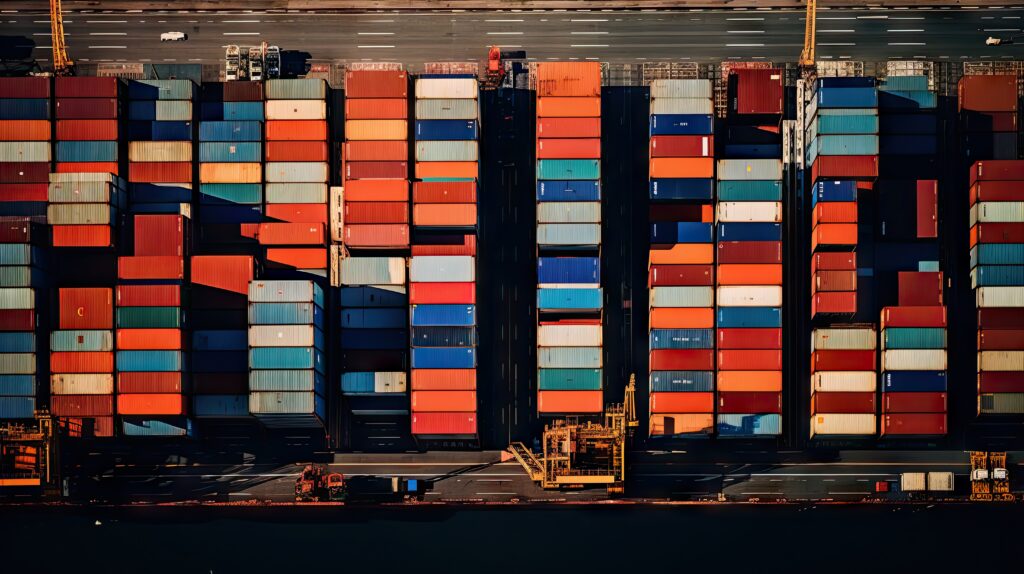
The Trump administration has imposed new tariffs on imports from 60 United States trading partners citing enforcement issues.
After the United States Supreme Court struck down Trump’s “reciprocal” duties of 10% to 50% in February, the administration is not attempting to rebuild his near-global tariff wall.
New U.S. tariffs that took effect Friday drew objections from trading partners around the world, though some countries said the duties would have little effect on existing levies or could slightly improve their trade terms.
The tariffs, detailed in a Federal Register notice, apply to 99.4% of U.S. imports but include numerous exemptions, including oil and gas, fertilizer and certain food products.
The Trump administration said the fees were imposed because U.S. trading partners had failed to adequately prevent goods made with forced labor from moving through their supply chains. Several countries disputed the allegation.
“The United States has had a forced labor import ban for nearly a century, and rigorously enforces it. It’s well past time for our trading partners to do the same,” U.S. Trade Representative Jamieson Greer said in a statement.
“Today’s action will begin to correct what is both a human rights abuse and distortive trade practice to improve the welfare of workers everywhere,” Greer said.
The administration imposed the duties under Section 301 of the Trade Act of 1974, allowing it to maintain a tariff floor on nearly all U.S. imports despite the Supreme Court ruling. Section 301 has survived previous legal challenges, potentially making the latest duties less vulnerable in court.
Trump’s temporary 10% global tariff expired at 12:01 a.m. EDT Friday after 150 days. The new duties took effect at the same time. Goods already in transit are exempt until 12:01 a.m. EDT July 28.
Tariff details
The United States imposed a 10% tariff on goods from Argentina, Bangladesh, Britain, Cambodia, Canada, Ecuador, El Salvador, Guatemala, Honduras, India, Indonesia, Jordan, Malaysia, Mexico, Pakistan, Sri Lanka and Trinidad and Tobago.
The administration said those countries had either banned or planned to ban imports made with forced labor but had failed to effectively enforce those restrictions.
The European Union, Taiwan, Japan, South Korea and Switzerland received rates that, when combined with existing most-favored-nation tariffs, total 10% or 12.5%.
Another 38 countries were assigned a 12.5% tariff. They include Vietnam, which issued a decree this week establishing more detailed rules prohibiting imports made with forced labor, and China.
The United States has accused China of detaining Uyghur minorities in forced-labor camps, allegations Beijing denies.
Greer previously said countries with trade agreements limiting U.S. tariff rates would not see the new forced-labor duties push their tariffs above those negotiated ceilings.
The European Union noted that commitment in its response.
“The EU notes positively the fact that this outcome is in line with the U.S. tariff commitments agreed under the EU-U.S. Joint Statement,” a European Commission spokesperson said, adding that the decision provided “positive momentum” for negotiations over additional tariff exemptions and deeper cooperation.
French Trade Minister Nicolas Forissier said the tariffs’ legal basis raised questions but added that the new framework provided businesses with greater certainty.
The Swiss government also disputed the allegations underlying the forced-labor investigation but said the United States was honoring previous commitments to keep its tariff ceiling at no more than 12.5%.
Ignacio Garcia Bercero, a former European Union trade negotiator and senior fellow at the Bruegel think tank, said the United States appeared to have structured the new duties to comply with the tariff provisions of its trade agreement with the EU.
However, he noted that additional tariffs could result from another Section 301 investigation into excess production capacity. That investigation targets 16 trading partners, including the European Union, China, India, Japan, South Korea and Switzerland.
Britain, which is not included in the second investigation, said the latest tariffs would not negatively affect its trade relationship with the United States.
“Our agreement with the U.S. remains in place, and today we see an improvement to our trading terms with zero tariffs on whisky and medical technology,” a British government spokesperson said.
The British Chambers of Commerce described the changes as a mixed outcome. The organization welcomed the removal of U.S. tariffs on whisky and a lower steel tariff than those faced by some competitors but said Britain had lost some of its comparative advantage over the European Union and other countries on additional goods.
Trading partners push back
Other U.S. trading partners responded more forcefully.
China said it opposed unilateral tariffs and argued that trade wars benefit neither side.
Trump administration officials have told Chinese officials they intend to restore Trump’s second-term tariffs on Chinese goods to the 20% level agreed to in a November 2025 trade truce with Chinese President Xi Jinping, but not exceed that rate.
Before Friday’s action, China’s tariff rate had fallen to 10%, excluding the 25% tariffs Trump imposed during his first term on certain industrial goods.
Australia and Brazil called the new tariffs unjustified and said they would seek their removal. Norway said there was “no basis” for the duties.
Canada, which was hit Monday with additional Trump tariffs on $20 billion worth of goods, issued a more restrained response.
“We will continue engaging constructively with the United States on this matter, as well as other outstanding issues, over the coming weeks to the mutual benefit of our citizens,” said Dominic LeBlanc, Canada’s minister responsible for U.S. trade.
Numerous products are exempt from the new tariffs, including oil and gas, fertilizer, certain food products and goods already covered by Section 232 national security tariffs, including automobiles, steel, aluminum and copper.
Aircraft and aircraft parts also are exempt, along with critical minerals.
Some industries benefited from the changes.
The Antwerp World Diamond Centre said the restoration of an exemption for diamonds was significant for Belgium’s diamond industry. Belgium exported $2.1 billion in polished diamonds to the United States in 2024.
The exemption had expired after the Supreme Court struck down Trump’s previous global tariffs in February.